
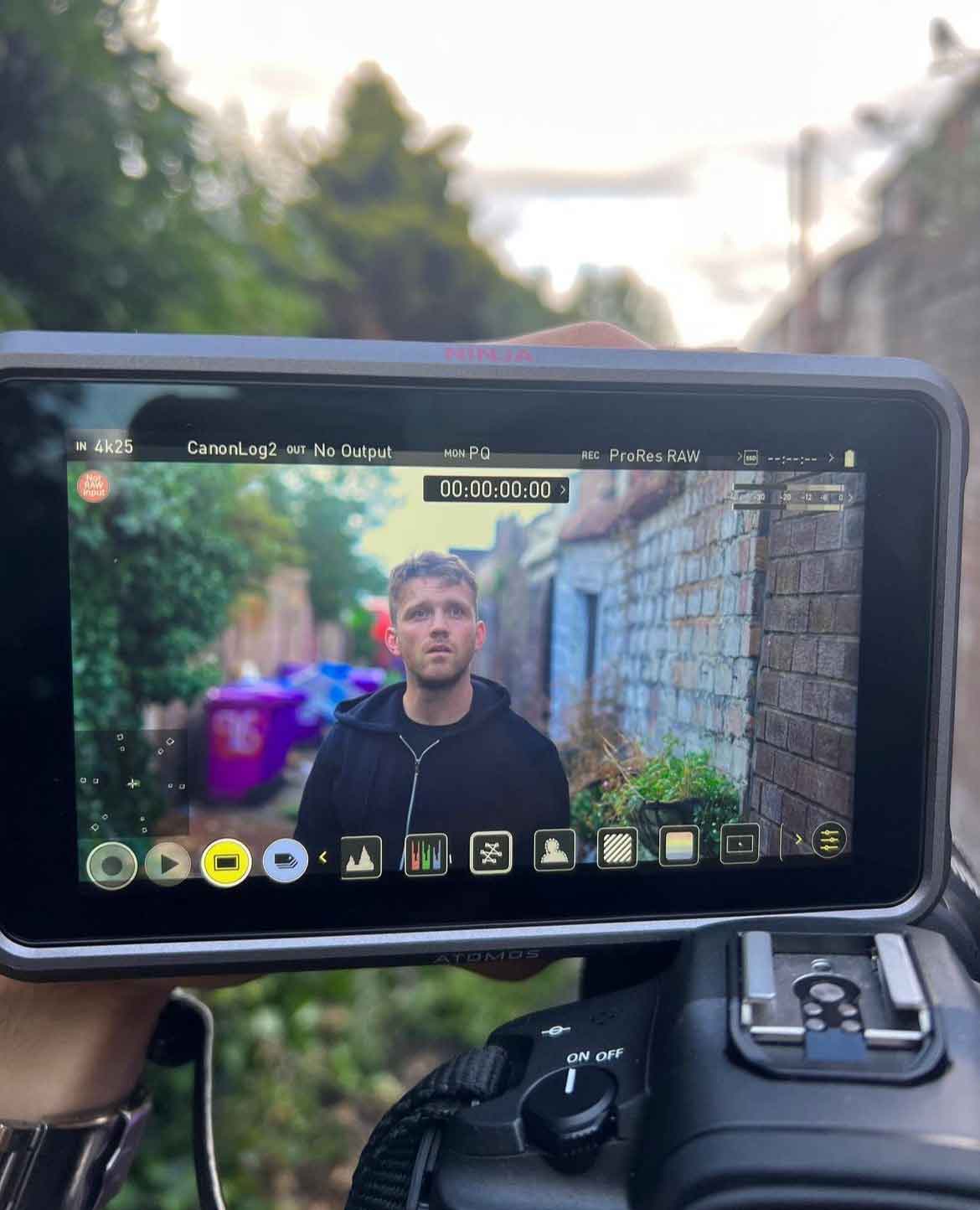
Most people who appear in business videos are not presenters. They are managers, engineers, chefs, carers and receptionists who have been asked to “just say a few words”. It is completely normal to feel nervous, and the good news is that you do not need to be a natural. You just need a few simple tricks and a crew that knows how to put you at ease.
I am an actor as well as a filmmaker, so I have felt camera nerves from both sides. Here is how to be confident on camera when you are filmed for work.
The short version
- Do not memorise a script. Know your points and talk.
- Look at the interviewer, not the lens, unless told otherwise.
- Answer in full sentences, including the question.
- Slow down and pause. Pauses get edited out, rushing does not.
- Mistakes do not matter. Just start the sentence again.
Do not learn a script
This is the big one. People think learning lines will make them feel safer, but memorised words sound stiff, and when you forget one you freeze. Instead, know the two or three points you want to make and talk about them the way you would to a colleague. In interviews I ask questions, and your natural answers become the film.
Where to look
For most business interviews, you look at the person asking the questions, who sits just beside the camera. It looks natural, like a conversation. If you are presenting directly to the audience, you look into the lens, and a good trick is to imagine a friend on the other side of it.
Answer in full sentences
Viewers will not hear my questions, so your answer needs to make sense on its own. If I ask “what do you enjoy about working here?”, start with “What I enjoy about working here is…” rather than “The people”. It feels odd at first, and it makes a huge difference in the edit.
Slow down
Nerves speed us up. Take a breath before you answer, and let yourself pause. Pauses are easy to cut, and they make you look thoughtful. Rushed answers that blur together are much harder to use.


What to wear
- Your normal work clothes or uniform, looking their best.
- Solid colours. Avoid tight stripes and small checks, which flicker on camera.
- Avoid all white or all black if you can. Mid tones are easiest to film.
- Skip noisy jewellery that might knock the microphone.
If you make a mistake
Just stop and start the sentence again. Nothing is live, and everything is edited. Some of the best moments in business videos come from the second or third go, once people have relaxed. Laughing at a stumble is fine too. It often ends up being the most human bit of the film.
What a good crew does for you
Part of my job is making you comfortable. I chat before we roll, start with easy questions, and keep the setup as small and unintimidating as possible. By the time we get to the important questions, most people have forgotten about the camera. If you are organising a shoot, testimonial video questions and what to include in a recruitment video have more tips.
Questions staff ask
How can I be more confident on camera?
Know your main points rather than learning a script, speak to the interviewer as if in a conversation, slow down, and remember that mistakes can simply be retaken.
Should I look at the camera in an interview?
In most business interviews you look at the interviewer beside the camera. You only look into the lens when presenting directly to the viewer.
What should I wear for a business video?
Your normal work clothes in solid, mid tone colours. Avoid tight stripes, small checks and noisy jewellery.
What if I forget what to say on camera?
Pause, take a breath and start the sentence again. Everything is edited, so mistakes never make the final film.
More business video guides: case study videos, business video length and training videos.
Team nervous about filming?
Let’s make it feel like a conversation
Business video in Liverpool, directed by an actor who knows how to put people at ease.